In Senegal, the colour blue breathes through fabric, memory, and time. From ancestral dye to NuNu Design, indigo in Senegal continues to flow like water—connecting memory, identity, craft, and culture.
In this blog piece, HAB researcher and IIAS Affiliated Fellow Hsiao-Chi Chu (Taipei National University of the Arts, Taiwan) shares her visit to indigo studios around Dakar, Senegal, while there for the Africa-Asia 3 conference-festival and the Indigo Dialogues roundtable. In conversation with Senegalese dyer and fashion designer Marie Madeleine “Nunu” Diouf, they reflect on the importance of indigo to Senegal, of marrying the past with the present through her designs, and empowering indigo as a craft and entry point for community collaboration.
This article was published in Humanities Across Borders programme (HAB) on October 25, 2025.
(Chinese is Below.)
Breathing Blue: Indigo in Senegal and NuNu Design
This past June, I travelled to Dakar, Senegal for the Africa-Asia: A New Axis of Knowledge 3 conference-festival. While at the conference, I kept thinking about visiting Indigo Studio or artists here. One afternoon, I was walking around the streets of Dakar when I suddenly found a store called NuNu Design. The moment I stepped inside, I felt the air itself was alive with shades of blue, flowing and breathing like a gentle ocean. The colours carried with them echoes of the past in Senegal, a living memory dyed into fabric and time.
Memory of Water: The Origin of Indigo
Dakar, the capital of Senegal, is at the westernmost point of the African continent and is a port city born from the sea. The flow of the tides brings a diverse and dynamic cultural landscape, making it an intersection where indigenous traditions, Islamic beliefs, and colonial heritage meet. The port is the heart of Dakar, also carrying the flow of trade and witnessing the ideas and inspirations. From this city, people can still take a ferry to the historic Island of Gorée, where memories of the slave trade still echo through time on the sea breeze.

Downtown Dakar city near the Marche Kermel textile market. Hsiao-Chi Chu, Dakar, Senegal (June 2025)

UNESCO Heritage site: Island of Gorée off the coast of Dakar. Hsiao-Chi Chu, Dakar, Senegal (June 2025)
Through observation, Senegalese clothing reveals a rich fusion of ancient customs and modern influences. Traditional garments are not expressions of style but they embody layers of history and cultural identity woven into daily life.
Within this cultural landscape, indigo is far more than a dye. It embodies how identity, memory, and day-to-day existence are interwoven. Indigo weaving and dyeing have deep roots in West African countries such as Senegal and Mali. Beyond aesthetics, blue carries protective meaning. Indigo is believed to unite the soul with nature, shielding the body and protecting against bad luck. Indigo-dyed fabric accompanies life’s most significant moments like weddings, births, and funerals, enveloping the body and soul like the “skin of life.”
In Senegal, peoples repeatedly dip, wring, and expose the cloth to the sun, preserving centuries of craft memory in a dialogue between water and cloth. They use plants as dyes colours from the earth and transformed by water and air. The fabric rests in the dye vat, oxidising in the sun. Like the breathing beat of nature, the blue hues shift in response to the wind and water. From weddings and festivities to daily wear, handmade indigo-dyed fabric presents a vivid life.

In Senegal, weaving is a language. Through the rhythm of thread and hand, people tell stories of the land, of memory, and of life. Hsiao-Chi Chu, Dakar, Senegal (June 2025)
However, indigo in Senegal also has been affected by industrial dyes gradually replacing natural plant-based dyeing. This custom was facing extinction due to the extensive use of commercial dyes and the growth of urbanisation.
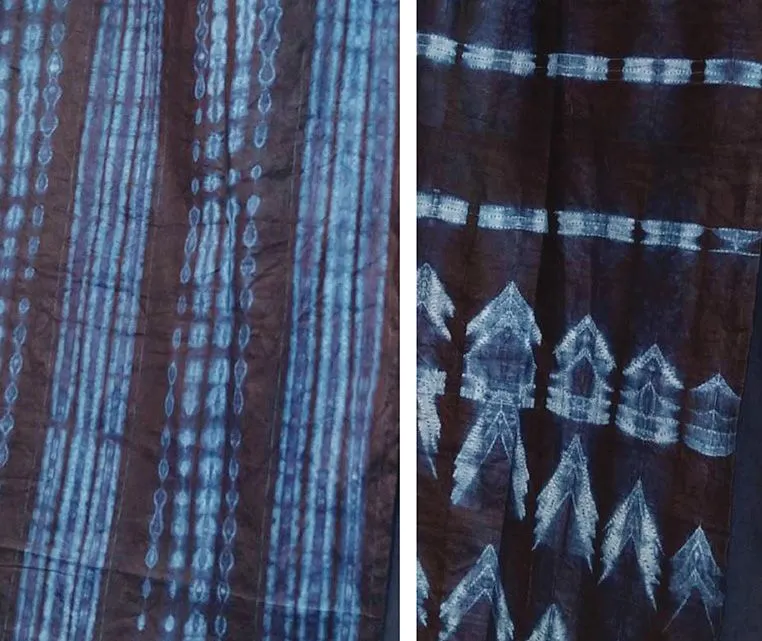
Side by side of NuNu Design’s indigo dye fabrics via industrial dyes. Hsiao-Chi Chu, Dakar, Senegal (June 2025)

NuNu‘s Rediscovering: The Blue from Memory
A few afternoons later, I walked into NuNu Design again. Designer Marie Madeleine Diouf (known as NuNu) was there. While I was selecting fabrics, I chatted with her in my poor French. She recalls seeing dancers wearing blue during festivals.
“I’ve known since childhood that life is blue for me,” she said.

NuNu Design shop in Dakar. Hsiao-Chi Chu, Dakar, Senegal (June 2025)
Before becoming a designer, NuNu worked in other fields for over a decade. In 2015, she decided to return to the colour memories of her ancestors and founded NuNu Design. Starting in her small home dye vat, she relearned traditional dyeing techniques, translating the memory of blue into a contemporary language.

Video screencap of interview with Sengalese designer and artistic director of Nunu Design, Marie Madeleine “Nunu” Diouf
This was shared to me by Nunu while visiting her shop. Le Galerie de 19M, Paris, France (2023) instagram.com/reel/CueTYl-rKY3/?igsh=Z2Vhemw0N3Fsc3ly
Her work incorporates classic West African fabrics, such as bazin, a glossy fabric and Senegalese handwoven fabrics, using indigo as a primary colour, supplemented by natural dyes such as plants, bark, and clay. Sometimes, she also incorporates indigo dyeing techniques into her new collections, using recycled denim as a base.
“Blue symbolises my identity and the depths of Senegal’s emotions,” NuNu says to me.
“My art serves as a safeguard for this memory and fulfils my obligation.”
Echoes of Blue: The Cycle of Water and Culture
For NuNu, bringing back indigo dyeing signifies a path towards reconnection and revitalisation. It involves establishing dyeing workshops and residency initiatives between urban and rural areas, motivating local women and youth to acquire skills in natural dyeing methods. She also has collaborated with residents near Somone and Ngaring in Senegal and established another brand, BANU. Moreover, for the past years, she has been researching alternative dyes, experimenting with new processes based on natural ingredients, such as pigments from cactus, eucalyptus, and various tree barks, to create unique colors that are very different from modern dyes. Through these efforts, indigo transforms into both a craft and a core for community collaboration.

Video screencap of the Indigo dyeing process at BANU. BANU, Somone, Senegal (2025). instagram.com/reel/DFlQ0rDN07I/?igsh=djh5bHh0bjdwMDFi
NuNu’s workshop carries both her creations and the empowerment of new life for locals. She has held live dyeing demonstrations, including an exhibition at the Musée Théodore Monod and participated in Chanel’s Le 19M project, collaborating with Senegalese dyers, to bring this ancient West African craft back to the international stage.
Side by side of BANU’s natural indigo dye fabrics. Hsiao-Chi Chu, Dakar, Senegal (June 2025)
In her store, people can see many of NuNu’s collections based on recycled denim. After being re-dyed with indigo, the textures of old garments become imbued with deep memories. It’s a stitching together of time, a process of restoration that flows from consumer culture back to the rhythms of craftsmanship.
Indigo dyeing is a river that flows for NuNu.
“Every time I dye cloth, it’s like a conversation with my memory and family, and also with the land and water,” she said.
Her brand is more than just a clothing line. It is a movement advocating empowerment and cultural sovereignty. She develops skills, provides jobs, and supports more people in rediscovering the importance of their hands through her dyeing workshop.
Against the backdrop of capitalism and globalisation, there is a soft countercurrent. Rather than resisting modernity, it self-renews as it distributes, nourishes, and permeates like water. The smell of indigo, like the sea and memories, was still in the air when I left her store. It’s Senegal’s deep blue, pouring from the ground to the world and subtly pulsing through time.
Like ripples on a sunlit sea stirred by the wind, indigo in Senegal drifts through memory and time.

藍之呼吸:塞內加爾靛藍與 NuNu 的設計
在塞內加爾,藍色的氣息穿透織物、記憶與時間而呼吸。從祖先的染料到 NuNu Design,塞內加爾的靛藍如流水般延綿不斷——連結著記憶、身份認同、工藝與文化。
本文由 HAB 研究員、IIAS 附屬研究員朱筱琪(臺北藝術大學,台灣)撰寫,記錄她前往塞內加爾達卡參加「非洲—亞洲 3」研討會暨文化節(Africa-Asia 3 conference-festival)及「靛藍對話」(Indigo Dialogues)圓桌論壇期間,走訪達卡周邊靛藍工坊的所見所感。透過與塞內加爾染師暨時裝設計師 Marie Madeleine「NuNu」Diouf 的對話,她們共同省思靛藍對塞內加爾的重要意義、如何透過設計連結過去與現在,以及如何以靛藍工藝為核心,賦予社群協作新的生命力。
本文於 2025 年 10 月 25 日發表於「跨界人文計畫」( Humanities Across Borders programme (HAB) )。
藍之呼吸:塞內加爾靛藍與 NuNu 的設計
今年六月,我前往塞內加爾達卡,參加「非洲—亞洲:知識新軸心 3」研討會暨文化節。身在會場期間,我心中一直惦念著想去拜訪當地的靛藍工坊或藝術家。某天下午,我在達卡街頭漫步,偶然發現了一間名為「NuNu Design」的店。踏入店門的那一刻,我感到空氣本身都活了起來——深深淺淺的藍色流動著、呼吸著,如同一片輕柔的海洋。那些顏色承載著塞內加爾的過去,是一段染入布料與時光之中的活生生的記憶。
水的記憶:靛藍的起源
達卡,塞內加爾的首都,位於非洲大陸的最西端,是一座因海而生的港口城市。潮汐的流動帶來多元而動態的文化景觀,使這裡成為原住民傳統、伊斯蘭信仰與殖民遺產相互交匯的十字路口。港口是達卡的心臟,承載著貿易的流動,也見證著思想與靈感的往來。從這座城市出發,人們至今仍可搭乘渡輪前往歷史名島——戈雷島(Gorée Island);關於奴隸貿易的記憶,依然在海風中迴響於時光深處。
透過觀察,塞內加爾的服飾呈現出古老習俗與現代影響的豐富融合。傳統服裝不僅僅是風格的表達,更將層層疊疊的歷史與文化身份編織進日常生活之中。
在這樣的文化風景裡,靛藍遠不只是一種染料。它體現了身份認同、記憶與日常生活如何彼此交融。靛藍的編織與染色技藝在西非國家,如塞內加爾和馬利,有著深厚的根基。藍色除了美學意義之外,更承載著守護的象徵。靛藍被認為能將靈魂與自然合而為一,庇護身體、抵禦厄運。靛藍染布伴隨著生命中最重要的時刻——婚禮、出生與葬禮——如同「生命的肌膚」,將身體與靈魂一同包裹。
在塞內加爾,人們一遍遍地將布料浸入染缸、擰乾,再攤開在陽光下曝曬,在布與水的對話之中,將數百年的工藝記憶留存下來。他們以植物為染料——取自大地的顏色,由水與空氣所轉化。布料在染缸中靜靜等待,在陽光中氧化。如同自然的呼吸節律,藍色的深淺隨著風與水的變化而流動。從婚禮與節慶到日常穿著,手工靛藍染布呈現出生動而鮮活的生命圖景。
然而,塞內加爾的靛藍傳統也受到了衝擊——工業染料逐漸取代天然植物染。隨著商業染料的大量使用與城市化的擴張,這項傳統工藝正面臨消逝的危機。
NuNu 的重新發現:記憶中的那抹藍
幾天後的某個下午,我再度走進 NuNu Design。設計師 Marie Madeleine Diouf(人稱 NuNu)正在店裡。我一邊挑選布料,一邊用我蹩腳的法語與她攀談。她憶起童年時節慶中看見舞者身著藍衣的景象。
「從小我就知道,生命對我而言是藍色的,」她說。
在成為設計師之前,NuNu 在其他領域工作了逾十年。2015 年,她決定回歸祖先的色彩記憶,創立了 NuNu Design。從自家小小的染缸出發,她重新學習傳統染色技藝,將藍色的記憶轉譯為一種當代語言。
她的作品融入了西非經典布料,如光澤感十足的「巴贊布」(bazin)與塞內加爾手工織布,以靛藍為主色,輔以植物、樹皮與礦土等天然染料。有時,她也會將靛藍染色技法融入新系列,以回收牛仔布作為底布。
「藍色象徵著我的身份認同,以及塞內加爾情感的深度,」NuNu 對我說。
「我的藝術是對這份記憶的守護,也是我對自己的承諾。」
藍色迴響:水與文化的循環
對 NuNu 而言,讓靛藍染色重新煥發生命,代表著一條通往重新連結與復興的道路。她在城鄉之間建立染色工作坊與駐村計畫,鼓勵當地婦女與青年學習天然染色技藝。她也與塞內加爾 Somone 和 Ngaring 附近的居民合作,另創品牌 BANU。過去數年間,她持續研究替代性染料,以仙人掌、尤加利樹與各種樹皮等天然原料實驗新的製程,創造出與現代染料截然不同的獨特色彩。透過這些努力,靛藍轉化為既是工藝技術、也是社群協作核心的存在。
NuNu 的工作坊承載著她的創作,也承載著為在地居民賦予新生的力量。她舉辦現場染色示範,包括在 Musée Théodore Monod 的展覽,並參與香奈兒的 Le 19M 計畫,與塞內加爾染師合作,將這項古老的西非工藝帶回國際舞台。
在她的店裡,人們可以看到許多以回收牛仔布為基底的 NuNu 系列作品。舊衣物經靛藍重新染色後,質地之中蘊含了深沉的記憶。這是一種對時光的縫補,一段從消費文化流回工藝節奏的修復歷程。
靛藍染色,對 NuNu 而言,是一條長流不息的河。
「每一次染布,都像是與記憶、與家人的對話,也是與土地和水的對話,」她說。
她的品牌不只是一條服裝線,更是一場倡導賦權與文化主體性的運動。她透過染色工作坊傳授技藝、提供就業機會,支持更多人重新發現雙手的力量。
在資本主義與全球化的大背景下,有一股柔軟的逆流悄悄湧動。它不是抵抗現代性,而是如水一般,在流動中自我更新,滋養、滲透,生生不息。離開她的店時,靛藍的氣息——如海洋,如記憶——仍縈繞在空氣之中。那是塞內加爾深沉的藍,從大地傾瀉而出,流向世界,在時光中悄悄地脈動。
如同陽光下的海面被風輕輕撥動,泛起層層漣漪——塞內加爾的靛藍,就這樣漂流於記憶與時間之中。
References
- NuNu Design: https://www.instagram.com/nunudesignbydk/
- BaNu: https://www.instagram.com/banudyeing/
- Sur le fil : de Dakar à Paris Exhibition (17.05 to 30.07.2023): https://www.le19m.com/agenda/sur-le-fil-de-dakar-a-paris-2