柬埔寨工作見習週誌第四週:12/20–12/24
自上週起密集進入田野,每每回到 Andong 等社區,不禁開始想著都市發展與重置貧民窟的矛盾,而也遲遲難寫下田野後的想法。
近十幾年來,由於都市開發大規模人口遷移,首都金邊市區的移動也造成許多地區的安置議題,如 Akphiwat Meanchey(或Veng Sreng)、Meanchey(中國大使館附近的前路站點居民)Dangkor區、現Andong(原來自Sambok Chab)、現Damnak Trayeung / Dangkor 區(原來自 Dey Krahorm)、Tuol Sambo/Dangkor 區(原來自Borei Keila)、Trapeang Anh — chanh/Dangkor 區(原來自 Sambok Chab)等。進到這些生活環境與條件相對較差的地區,可明顯感受到社會中位處兩端差異。
(English is below.)

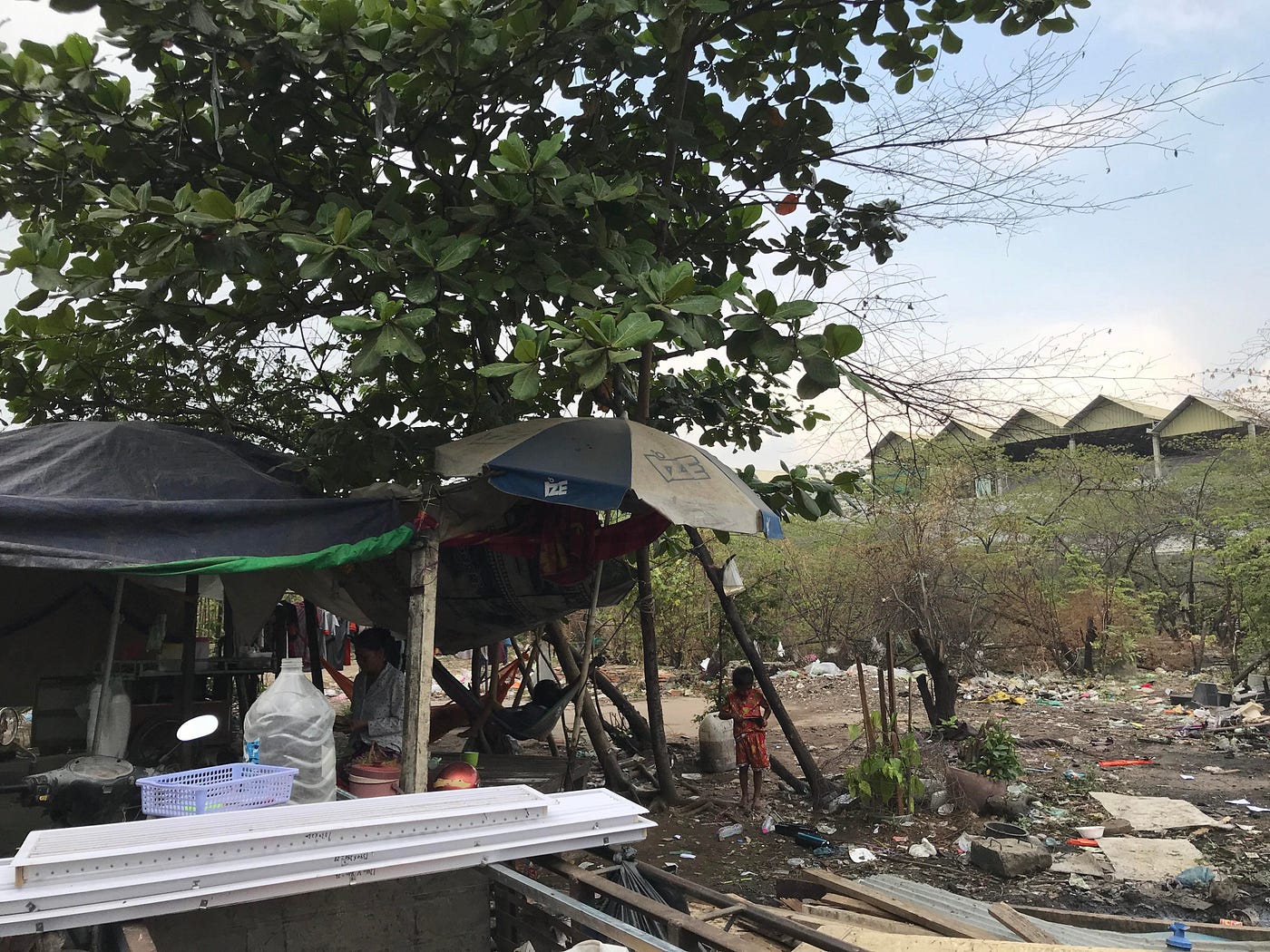
實習單位近年於安東執行之PE&D HALI project 與UNICEF 之Children Protection計畫的地區為位於柬埔寨金邊之安東I, III, V等地區。回溯安東地區的歷史,此地始於 2006 年,由於原位於金邊市中心的Sambok Chap 貧民窟將作為都市開發預定區域,原居住於此的1000 多個家庭失去了家園和財產(官方數字要低得多)。這些家庭被搬遷到中心城外24公里的現安東地區,剛遷去時這沒有房子、電、任何衛生排污下水道、雨季防洪的排水管道、垃圾收集,更何況沒有學校或鄰近醫院等基礎設施。部分居民也因為遷移居地而失去工作和生意,那些經營小型企業(水果攤等)的人必須重新開始;抑或為了在城裡保住建築工作,通勤 24 公里的成本高於一天的工資。像這樣的事件,窮人失去家園以騰出發展空間,在柬埔寨或其他地方並不少見,且貧民窟的人們通常不擁有自己的財產,或者他們無法證明所有權,即便有些居民原擁有土地,但因歷史上的動亂衝突,歷經紅色高棉 (1975–1979) 統治,當時財產記錄都丟失或毀壞,爾後也難以證明這些居民已於此居住一段時間,技術上來說可有部分權利居住;然而現實卻是,難以抗命。
這樣的都市發展與重置住所所成的空間、生存權利壓縮,是否造成更多社會議題與深化階級差距呢?

Andong 地區現有6個社區(Community),這幾趟的訪視,發現各區的生活狀況不一,目前Andong I由於各NGO/INGO的介入與進入,其生活狀況已相對其他區域好很多,無論是街道、房舍狀況等都有經過一定的修繕。雖然10幾年來,已投入相當多的援助/發展工作,但一街之遙仍是黃沙/泥濘漫漫。

歷經幾週的觀察,不禁開始思考柬埔寨社區發展的各面向議題,柬埔寨長期外援介入/進入,如何培力當地人重新思考社區與發展社區,如何開展社會工作與社群/區發展工作等相互間的合作?回憶過去於台灣參與社區工作的經歷,自90年代起之社區總體營造,強調社會文化工作需從下而上發展,鼓勵在地民眾自發性參與社區事務,主動思考社區需求,進而想像社區生活。因此,有許多計畫相繼開展,並有許多機構著手進入輔導社區,如:Artivst、Activist、社區規劃師、社區營造中心、社工師等,開始藉由公家/民間設造團隊的協力,針對地方進行探索,重新尋找社區價值與意義,並活化社區。
看得還太少,尚難以定論怎樣的介入/進入的援助或發展工作才是適切的,然而,在與柬埔寨當地草根的NGO單位工作-SKO,拜訪SKO同仁於Andong社區的家,她們如何成為SKO的推力,透過相處與工作一點一點地了解在地深根的力量,似乎已逐漸有了雛形。
Urban Development or Relocating Slums?
Cambodia Job Shadowing Weekly Journal — Week Four: December 20–24
Since last week, I have been immersing myself intensively in fieldwork. Every time I return to communities like Andong, I cannot help but begin thinking about the contradiction between urban development and the relocation of slums — and I have been struggling to put my thoughts from the field into words.
Over the past decade or so, large-scale population displacement driven by urban development has generated significant resettlement issues across many areas of the capital, Phnom Penh. These include Akphiwat Meanchey (also known as Veng Sreng); Meanchey (former roadside residents near the Chinese Embassy); the Dangkor district; present-day Andong (originally from Sambok Chab); present-day Damnak Trayeung / Dangkor district (originally from Dey Krahorm); Tuol Sambo / Dangkor district (originally from Borei Keila); and Trapeang Anh-chanh / Dangkor district (originally from Sambok Chab), among others. Entering these areas — where living conditions and environments are relatively poor — makes the stark contrast between the two ends of the social spectrum immediately and unmistakably felt.
The PE&D HALI Project and UNICEF’s Child Protection Programme, which my internship organization has been implementing in Andong in recent years, cover Andong Communities I, III, and V in Phnom Penh, Cambodia. Tracing the history of the Andong area: it was established in 2006, when the Sambok Chab slum, originally located in central Phnom Penh, was designated for urban redevelopment. More than 1,000 families (the official figure was much lower) lost their homes and property. These families were relocated to what is now the Andong area, 24 kilometers outside the city center. When they first arrived, there were no houses, no electricity, no sanitation or sewage systems, no drainage pipes to manage flooding during the rainy season, and no garbage collection — let alone schools or nearby hospitals or any other basic infrastructure. Some residents also lost their jobs and businesses as a result of the move. Those who had run small enterprises — fruit stalls and the like — had to start over from scratch. For others who wanted to keep construction jobs in the city, the cost of commuting 24 kilometers exceeded a single day’s wages.
Events like this — where the poor lose their homes to make way for development — are far from uncommon in Cambodia or elsewhere. Slum residents typically do not hold formal title to their properties, or cannot prove ownership. Even among those who originally had some claim to land, the historical upheaval of the Khmer Rouge period (1975–1979) meant that property records were lost or destroyed, making it technically difficult to establish that these residents had lived there long enough to hold even partial rights of occupancy. The reality, however, was that resistance was nearly impossible.
Does this kind of urban development — and the spatial compression and erosion of basic survival rights that comes with forced resettlement — generate deeper social problems and widen the class divide?
The Andong area currently comprises six communities. Across my visits, I observed that living conditions vary considerably between them. Andong I, where numerous NGOs and INGOs have intervened and become active, has relatively better living conditions than the other areas — streets and housing have undergone a degree of repair and improvement. Yet despite more than a decade of substantial aid and development work, just one street over, there is still nothing but dust and mud.
After several weeks of observation, I have found myself increasingly reflecting on the many dimensions of community development in Cambodia. Given the long-standing presence of external aid, how can local people be empowered to rethink community and develop it themselves? How can social work and community development efforts foster meaningful collaboration with one another?
Recalling my past experience of community work in Taiwan, the community-building movement (社區總體營造) that began in the 1990s emphasized that social and cultural work must develop from the bottom up — encouraging local residents to participate voluntarily in community affairs, to actively think about community needs, and ultimately to imagine the kind of community life they want. As a result, many programs were launched, and many organizations began entering communities to provide guidance, including artivist collectives, activist groups, community planners, community-building centers, and social workers. Working in collaboration with both public and private sector teams, they began exploring local contexts, rediscovering community values and meanings, and revitalizing communities.
I have still seen far too little to draw firm conclusions about what forms of intervention or aid and development work are truly appropriate. Yet through working with SKO — a grassroots local NGO in Cambodia — and visiting the homes of SKO colleagues in the Andong community, watching how these women became a driving force within SKO, I have been slowly, through daily interaction and shared work, coming to understand the power of being deeply rooted in a place. Something is beginning to take shape.