柬埔寨工作見習週誌第五週:12/27–12/31
與實習單位共同工作的幾週後,寫下:「Do we implement a true participation/empowerment idea into the community or still a utopia?」
柬埔寨長年外援的投入,能看見國家的發展,草根力量逐漸崛起。也正因為參與在地組織的實習,作為一個完全參與觀察者,更深切感受到在外援進入到如何發展屬於自己樣貌的公民力量。
(English is below.)
Samatapheap Khnom Organisation (SKO) 是柬埔寨的非營利組織,成立於 2007 年,最初由法國非政府組織 Planète Enfants & Développement (PE&D)支持,其服務社區遍及首都金邊郊區之貧民窟社區。作為一草根的在地組織,SKO 在外緣培力下逐漸發展出屬於組織的工作方法學與未來將朝向的藍圖。而其中最令我驚豔的莫過於SKO幾位社工同仁皆為服務社區之貧民窟居民,長年的在地工作、觀察與培力,這幾位媽媽們也進入機構、回到所屬居住社區服務。她們熟知服務社區的語言、生活模式、居民特性等,更成為組織將服務帶入社區的重要媒介。

對於現地工作者需要思考 what do we want(想要)? what do they need(需要), what is the most priority part of needs(必要)? 又如何能準確地落實呢?誰能作為橋樑 (Core member)?什麼方式能創造對話/發聲平台呢(A Strategic Approach)?……
回想 Sherry R. Arestine 於1969年發表的公民參與階梯 (Arnstein’s Ladder of Citizen Participation),以及後續許多學者、實務工作者等就不同計畫、對象發展出不同的階梯模組,以參與理論或者實際工作來看,「參與(Participation)」確實是一個激起動力的取徑。然而,又有多少發展計畫確切落實「公民參與」的理想?

討論過程中,一起回溯參與式方法學的發展脈絡,「參與」在某種意義上 take part in 在某些層面和某些個人之間的集體行動和決策,是社會生活中以既定存在。且歷史上,動員現有社會網絡和團體以實現「更大利益」的「參與式發展」也屢見不鮮;然而重要的是「怎樣形式的參與」,所有社會研究、社會學科等,包括發展政策評估,在某種意義上都是參與性的。
討論過程中,一起回溯參與式方法學的發展脈絡,「參與」在某種意義上 take part in 在某些層面和某些個人之間的集體行動和決策。能真正落實影響力(impact)的參與式評估(Participatory Evaluation) [1]的思考並非只有「參與」本身,然而重要的是「怎樣形式的參與」? — — 為何提倡參與 (WHY participation is being advocated)、誰正在參與 (WHO is participating)、當他們參與時 (WHEN they are participating)、他們如何參與 (HOW they are participating)、如何從參與式評估過程中受益 (WHO BENEFITS from the participatory evaluation process)、誰真正受益 (WHO BENEFITS from the outcome)?在工作中,面對相對被邊緣化、資源不足的社群持續投入服務的過程中,思考社群/區之可持續性(Sustainability)、提升韌性(Resilience)是相當重要的。且由於被邊緣化、資源匱乏、貧窮等社群所面臨的困境與議題是相當複雜的,任何單一的評估都無法解決議題之發展過程中固有的緊張局勢和權衡取捨,而(1)強化服務對象的韌性能力(2)創造對話/發聲平台以打破偏見等,且要真發展有效的策略和變革,也不可避免地需要直接解決權力和不平等問題。
SKO同仁接續提到:「儘管在現實情境中許多皆為捐助機構/獲政府資助作為決策者或相關利益者,而落實「草根」(Grassroot)參與是需要 bottom-up participation與top-down participation 同時發生的。」其一關鍵的挑戰是如何建立參與式方法且創新的基礎上,以實現真正公平和可持續的社群/區learning、self-resilience、forwarding、fully citizen particiaption過程。而已於自己社區服務的SKO社工們,也歷經參與培力的過程,更能深刻理解如何再回到所屬社區服務。
教育學家杜威曾經說到「我相信學校必須再現生活,因為對孩子來說真實和重要的生活,就像他在家裡、社區或操場上進行的生活一樣。」
“I believe that the school must represent present life-life as real and vital to the child as that which he carries on in the home, in the neighborhood, or on the playground.”
— John Dewey (My Pedagogic Creed)
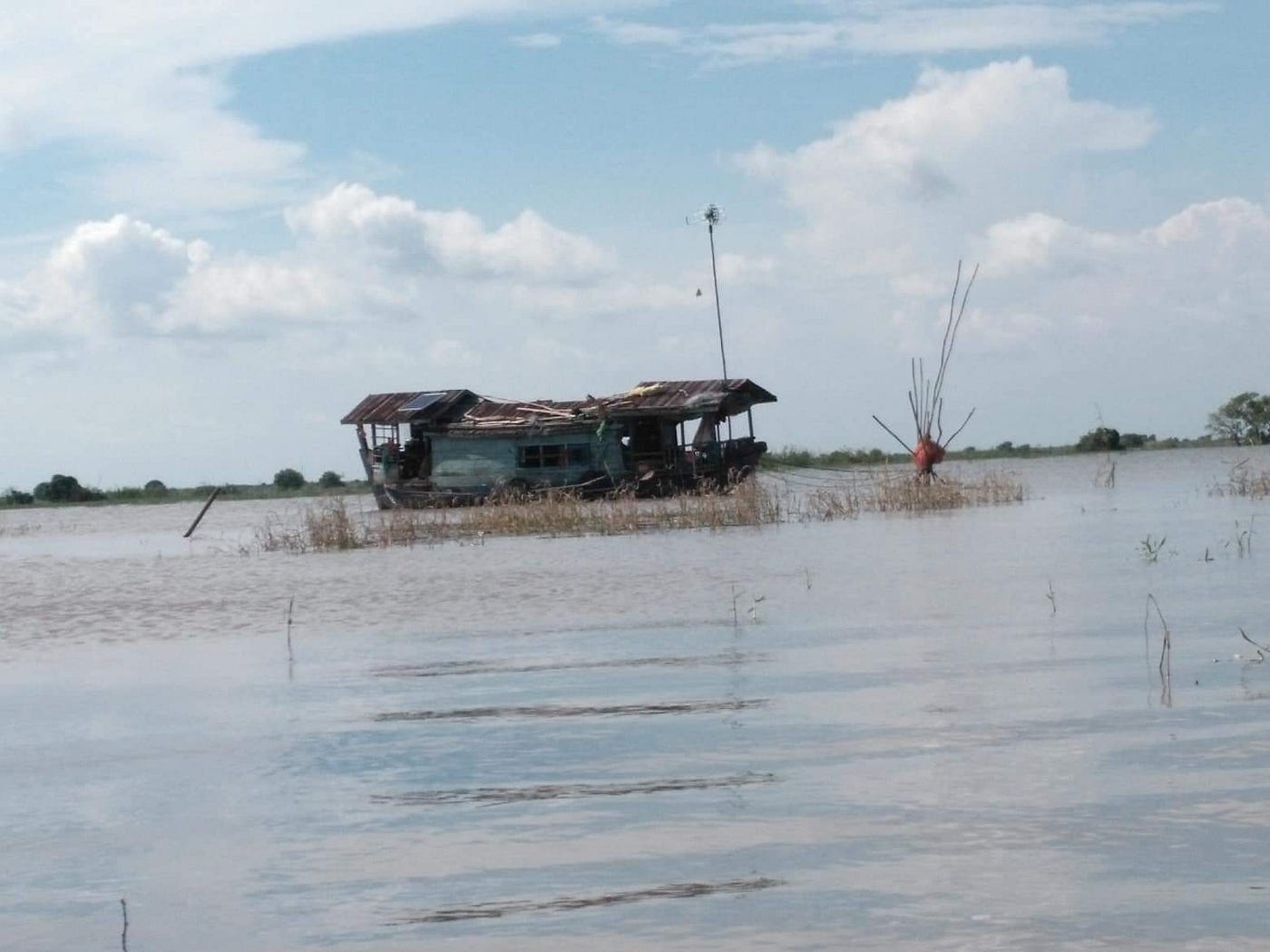
規劃著接下來兩週的繞洞里薩湖(Tonle Sap)浮村(Floating village) 田野調查,或許會更能了解柬埔寨各面向的狀況吧!

[1] Participatory Evaluation (參與式評估)起源於 1970 年代開發的組織、研究和規劃方法,作為日益強調大眾參與發展的一部分。這些方法尤其包括:(1)以‘Activist Participatory Research’(APR) 和Participatory Action Research (PAR)的各種名稱發展社區意識和動員技術;(2)起源於農業系統研究和人類學田野研究的發展,後來被稱為Rapid Rural Appraisal (RRA), Participatory Rural Appraisal (PRA) 與 Participatory Learning and Action (PLA)。1990 年代,參與式評估的方法學廣泛的發展與創新,可見於公民運動、NGOs、研究機構,甚至於資助單位。對基於社群/區的參與式規劃的關注,包括對現有政策的評估,Appreciative Inquiry和 Deliberative and Inclusionary processes(審議和包容性進程)中得到進一步的體現。同時NGOs也對內部參與式監控、評估和影響系統發展、試驗和創新。
The Utopia or Dystopia of Participation?
Cambodia Job Shadowing Weekly Journal — Week Five: December 27–31
After several weeks of working alongside my internship organization, I wrote in my journal: “Do we implement a true participation/empowerment idea into the community, or is it still a utopia?”
Years of international aid flowing into Cambodia have made national development visible, and grassroots forces have been gradually rising. It is precisely through interning with a local organization — as a complete participant-observer — that I have come to feel more deeply how, as external aid enters, a civic force that looks like its own is slowly taking shape.
Samatapheap Khnom Organisation (SKO) is a Cambodian nonprofit organization established in 2007, initially supported by the French NGO Planète Enfants & Développement (PE&D). Its service communities span slum communities on the outskirts of the capital, Phnom Penh. As a grassroots local organization, SKO has gradually developed — with the support of external capacity-building — its own working methodology and vision for the future. What impressed me most was that several of SKO’s social workers are themselves residents of the slum communities they serve. After years of on-the-ground work, observation, and empowerment, these women — mothers from those very communities — have joined the organization and returned to serve in their own neighborhoods. They know intimately the language, lifestyle, and characteristics of the people in their service communities, and have become crucial bridges for bringing the organization’s services into those communities.
For on-the-ground workers, key questions constantly need to be grappled with: What do we want? What do they need? What is the most priority part of their needs? And how can these be accurately put into practice? Who can serve as a bridge — a core member? What approaches can create platforms for dialogue and voice — a strategic approach?
Reflecting on Sherry R. Arnstein’s Ladder of Citizen Participation, published in 1969, and the many subsequent models developed by scholars and practitioners for different projects and target groups, it is clear that “participation” — whether in participatory theory or in practical work — is genuinely an approach that generates momentum. Yet how many development projects actually put the ideal of citizen participation into real practice?
In our discussions, we traced together the historical development of participatory methodology. “Participation,” in a sense, means taking part in collective action and decision-making at certain levels and between certain individuals — something that already exists as an established feature of social life. Historically, “participatory development” that mobilizes existing social networks and groups to serve a “greater good” has been common. But what matters is: what form does participation take? All social research, social disciplines, and development policy evaluation are, in some sense, participatory.
The key to participatory evaluation [1] that truly delivers impact is not participation itself, but rather what form of participation is being used. This calls for asking: Why is participation being advocated? Who is participating? When are they participating? How are they participating? Who benefits from the participatory evaluation process? Who truly benefits from the outcomes? In the work of continuously serving communities that are relatively marginalized and under-resourced, thinking carefully about community sustainability and building resilience is critically important. Because the challenges and issues faced by marginalized, resource-deprived, and impoverished communities are extraordinarily complex, no single evaluation can resolve the inherent tensions and trade-offs in the process of addressing them. Strengthening the resilience of those being served, and creating platforms for dialogue and voice to break down prejudice, are both essential. And to genuinely develop effective strategies and bring about change, it is inevitable that issues of power and inequality must be directly confronted.
SKO colleagues went on to add: “In reality, many donors and government agencies serve as decision-makers or stakeholders. Realizing ‘grassroots’ participation requires both bottom-up and top-down participation to occur simultaneously.” One of the key challenges is how to build on participatory methodology and innovation to achieve a genuinely equitable and sustainable process of community learning, self-resilience, forward momentum, and full citizen participation. The SKO social workers who are already serving within their own communities have themselves gone through the process of participatory empowerment, and are therefore better placed to understand how to return and serve the communities to which they belong.
“I believe that the school must represent present life — life as real and vital to the child as that which he carries on in the home, in the neighborhood, or on the playground.” — John Dewey (My Pedagogic Creed)
I am planning the fieldwork for the next two weeks, traveling around Tonle Sap Lake and its floating villages. Perhaps it will give me an even fuller understanding of the various dimensions of life in Cambodia.
Note [1]: Participatory Evaluation originated from organizational, research, and planning methods developed in the 1970s, as part of a growing emphasis on popular participation in development. These methods include, in particular: (1) techniques for building community awareness and mobilization, developed under various names such as Activist Participatory Research (APR) and Participatory Action Research (PAR); and (2) approaches originating in agricultural systems research and anthropological fieldwork, which later became known as Rapid Rural Appraisal (RRA), Participatory Rural Appraisal (PRA), and Participatory Learning and Action (PLA). In the 1990s, participatory evaluation methodology expanded and diversified widely, as seen in civic movements, NGOs, research institutions, and even among donor organizations. Attention to community-based participatory planning — including the evaluation of existing policies — was further reflected in approaches such as Appreciative Inquiry and Deliberative and Inclusionary Processes. At the same time, NGOs developed, tested, and innovated internal participatory monitoring, evaluation, and impact systems.